
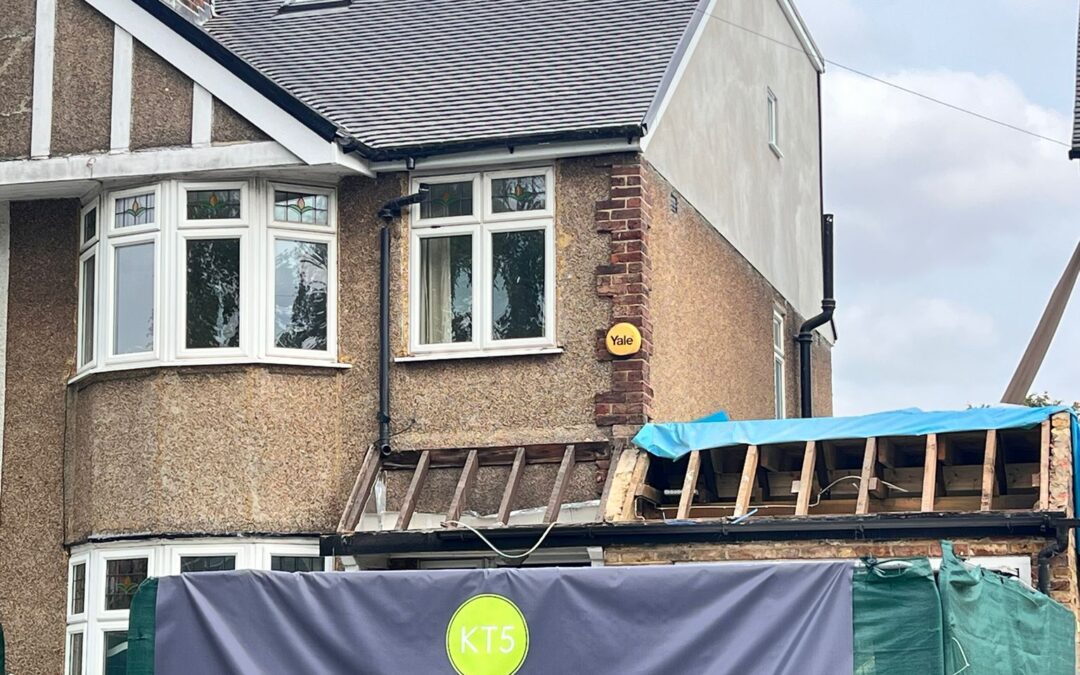
Why Choosing the Right Roof Type Matters for Your Extension
When you’re planning a home extension, the roof style isn’t just a finishing touch — it affects cost, planning permission, insulation, maintenance, and how the finished extension fits with your existing home. For London & Surrey homes especially, where architecture and space are at a premium, selecting between a pitched roof extension and a flat roof extension is a key decision.
We’ll walk you through both roof types, compare their pros and cons, and help you decide which fits your budget, style and long-term value.
What Is a Pitched Roof Extension?
A pitched roof extension features sloped surfaces (often matching the angle of the existing roofline) and is a common choice for traditional British houses.
Key characteristics:
-
Easier to shed rainwater, reducing risk of pooling and leaks.
-
More space for insulation and ventilation, which can improve energy efficiency.
-
A classic and often more architectural finish — it blends well with period houses.
Drawbacks:
-
Typically higher construction cost due to more materials, labour and structural complexity.
-
Might need more planning/structural control if the roof height changes or the extension is large.
What Is a Flat Roof Extension?
Flat roof extensions have become increasingly popular for modern and contemporary properties. They feature a low-pitch or almost horizontal roofline, often with great glazing, lanterns or roof terraces.
Advantages:
-
Often lower initial cost and simpler construction.
-
Excellent for large glazed roofs/lanterns, or modern designs where you want a sleek profile.
-
Can be designed as a roof terrace or for PV panels more easily in some cases.
Considerations:
-
Because of the low slope, drainage must be carefully designed — pooling water is a risk.
-
Lifespan and maintenance may be less favourable compared to pitched roofs unless designed and maintained well.
Pitched vs Flat Roof Extensions: Side-by-Side Comparison
| Feature | Pitched Roof Extension | Flat Roof Extension |
|---|---|---|
| Initial cost | Typically higher for materials + labour | Often lower, but depends on complexity |
| Drainage & weather | Excellent water runoff, fewer pooling issues | Requires very good drainage, potential for issues |
| Insulation / ventilation | More space for insulation, better airflow | Needs high-performance insulation, possibly higher ongoing running cost |
| Design & appearance | Blends well with traditional homes, more head-height options | Modern look, ideal for lots of glazing or roof terrace |
| Lifespan & maintenance | Generally longer lifespan | Requires more regular maintenance to maintain waterproofing |
| Planning / local context | May require more scrutiny if roof height changes | Often simpler under Permitted Development if within height limits |
Cost and Budgeting: What to Expect
When choosing your roof type for an extension in London/Surrey, both roof style and additional features (glazing, roof lanterns, PV, structural works) will affect cost significantly.
Typical costs:
-
Flat roof extension: may cost less upfront, but ensure allowances for high-quality waterproofing and drainage.
-
Pitched roof extension: higher initial cost, but may offer better long-term value and fewer maintenance demands.
-
Consider also: insulation quality, rooflights/lanterns, structural reinforcement (especially if converting roof space or altering span).
For both types, budget for structural engineer involvement, building control, roof coverings, skylights/lanterns and maintenance contingency.
How to Decide Which Roof Type Suits You
-
Architectural context & existing home style – For period homes, a pitched roof may integrate better; for modern homes or single storey rear extensions, a flat roof may offer design freedom.
-
Budget & lifecycle cost – Consider not just upfront cost but maintenance and running costs over 10–20 years.
-
Usage – Will the extension include head-height space, loft conversion, vaulted ceilings (pitched may suit) or large rooflights/patio/terrace (flat may suit)?
-
Planning and building control constraints – Roof height, neighbour impact, heritage factors may favour one type.
-
Timeline and disruption – Flat roofs often quicker to build; pitched may require more time/complexity.
-
Lighting & views – Flat roofs give flexibility for lanterns, glazing and roof terraces; pitched roofs may offer loft opportunities or unique internal volumes.
Why Choose KT5 Construction for Your Roof Extension Project
At KT5 Construction, we specialise in roof-structure work and home extensions across London & Surrey. Here’s why homeowners trust us:
-
We provide tailored advice on pitched vs flat roofs, aligning style, budget and performance.
-
Our team includes structural engineers and project managers so the design, approval and build process is seamless.
-
We deliver quality craftsmanship, premium materials and guarantee proper waterproofing, ventilation and long-term durability.
-
With transparent budgeting and scheduling, we aim to complete your extension on time and on budget.
-
We understand local authority planning and site constraints in London/Surrey so we minimise risk of delays.
Frequently Asked Questions
Are flat roof extensions always cheaper than pitched roof extensions?
Not always — while the roof structure itself may be simpler, high-end finishes, large rooflights or terraces can push flat roof costs up. Pitched roofs cost more initially but may offer better longevity.
Can I convert the roof space with a pitched extension and add extra floor?
Yes — pitched roof extensions often allow for eaves or loft space, but this adds complexity, planning scrutiny and potentially higher cost.
How much maintenance do I need for a flat roof extension?
Regular inspections, cleaning of drains, checking waterproof membranes and rooflight seals are key. Flat roofs can require more upkeep than well-constructed pitched roofs.
Will a flat roof extension affect sunlight into neighbouring houses more than a pitched roof?
Possibly — planning officers assess overshadowing and impact on neighbours. A flat roof may sit lower, which can be an advantage, but glazing/terrace elements must still be assessed.
Can I add a roof terrace on a flat roof extension?
Yes — this is one of the strengths of flat roofs. But you’ll need to consider structural support, waterproofing, balustrades and access safely.
Ready to Build Your Roof Extension? Contact KT5 Construction Today
Whether you’re leaning towards a pitched or flat roof extension, let KT5 Construction help you make the right choice — build it well, build it once. Call us for a free consultation in London & Surrey.
Recent Comments